Monitoring the Hogsmill : eel trap and rag removal
 |
| Joe Pecorelli from ZSL The eel trap was reinstalled by Joe on 20 April 2016 to allow monitoring of this year’s eel passage. The first eel of the season was recorded during the second check of the year, and on 29 April 2016 three eels were found. The eels are transferred to a bucket, where they are measured before being carefully returned to the river. Most of today’s catch belonged to a similar age class, although a much larger eel was observed further upstream near the cemetery later that day. |

Look out for eel traps along other rivers such as this one at Teddington Lock
 |
| Emptying the trap |
Kingston University is running another eel training event during May, so if you are interested in helping out at any
point from April to September with the checks, please sign up for the
training (see the Kingston University biodiversity blog).
Some not so good news with the river monitoring (see March, 2015 posts) :
three out of the four RMI monthly checks have found breaches in trigger
levels – meaning that recent pollution incidents have affected this stretch of the
river, compared to last year, when none of the RMI checks resulted in a
breach.

 | |
| Diesel A240 outfall |
Pollution events are complex and range from misconnected sewage pipes and washing machines from private households; to large scale releases of sewage (see post of 19.4.16). During April, diesel spilled into the Hogsmill for four days - from an outfall in Tolworth - although the source could not be located.
 |
| Dead chub Villiers Road April, 2016 |
 |
| Dead bullhead November, 2015 |
Dead fish are also a sign of pollutants in the water course. A dead barbel was found by the Guildhall after a major sewage spill (8.2.16) - see February post. The spill deposited a lot of 'rag' along the waterway, which we attempted to clean up last Friday.
 |
| Bill at the sewage outfall |
 |
| 'Rag' on the vegetation overhang |
Removing 'rag' from the channel is a major undertaking and can disturb nesting birds at this time of year. However some removal is a useful way of monitoring fresh spills; as well as improving the environment.
It is amazing how nature fights back, and 2016 is going to be a good year for water starwort (below) a plant that has obviously benefitted from the in-channel improvements undertaken over the last two years.
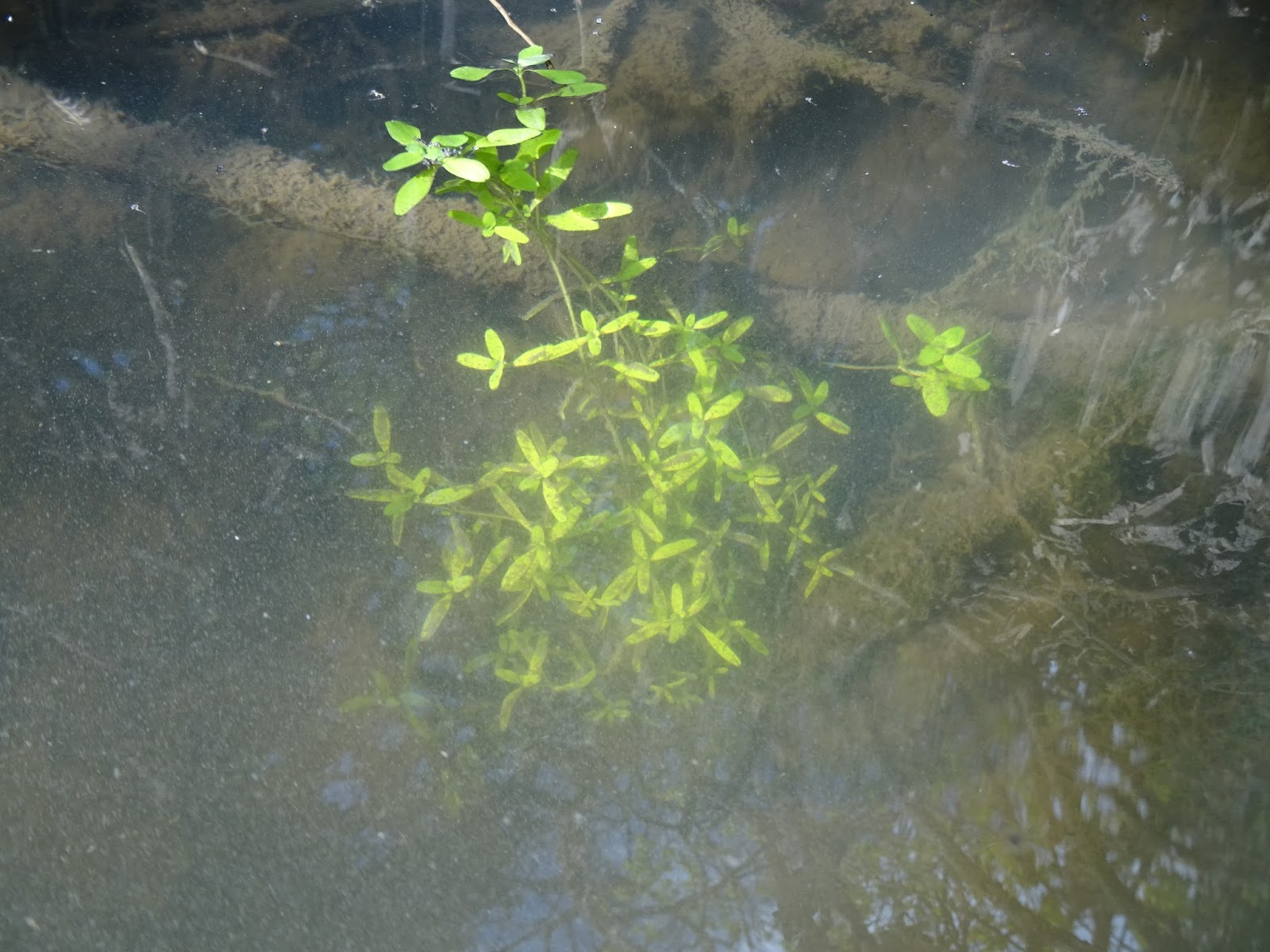 |
| water starwort |


Comments
Post a Comment
Please share your thoughts